+86 311 8533 5186
Bolt cutters are indispensable heavy-duty hand tools widely used across industrial, construction, maintenance, and manufacturing environments. Whether you're a contractor needing to quickly cut through hardened bolts, a maintenance team removing chain links, or a warehouse handling tough metal wires, understanding what bolt cutters are and how to use them correctly can improve safety and efficiency on the job site. In this guide, we break down their key features, working principles, and practical usage tips to help you choose and operate bolt cutters with confidence.
Bolt cutters are heavy-duty cutting toolsdesigned to cut metal materials using sharp, hardened steel jaws and long handles. Unlike ordinary wire cutters, bolt cutters feature a leverage mechanism that generates greater cutting force, making them suitable for demanding applications.
They are commonly used to cut:
Steel chains and metal links
Bolts, nails, and screws
Metal wire and fencing materials
Steel rods and other compatible metal components
The cutting capability depends on the tool's size, blade design, and the hardness and diameter of the material. Not all bolt cutters are suitable for hardened steel or high-strength alloys.
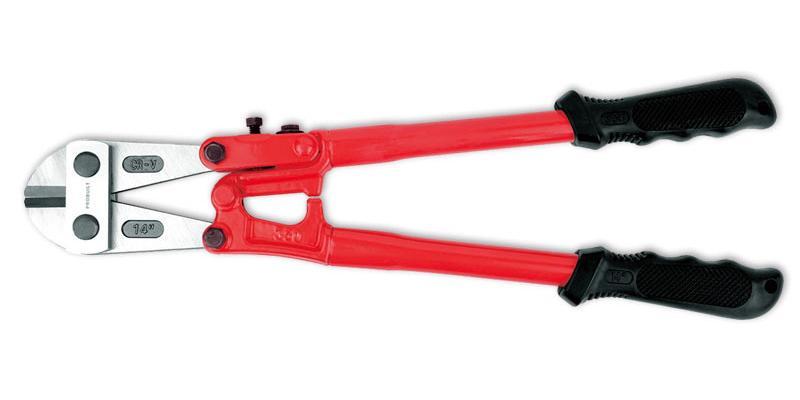
Instead of cutting the material like scissors, bolt cutters focus their force on a small contact area of the blade to crush the material. A standard long handle and a compound hinge (a joint that provides additional strength to the jaws) work together to provide the bolt cutter with incredible cutting power.
Their cutting force is obtained through the "leverage" principle. This means that the force applied over a long distance (in this case the length of the handle) is converted into a larger force over a short distance (in this case the jaws).
Using bolt cutters correctly helps improve cutting efficiency, prevent tool damage, and reduce the risk of injury.
Step 1: Choose the Right Bolt Cutter
Select a bolt cutter suitable for the material's diameter and hardness. Larger bolt cutters generally provide greater leverage, while compact models are easier to handle in confined spaces.
Always check the manufacturer's cutting capacity before use.
Step 2: Inspect the Cutting Jaws
Before cutting, check the blades for cracks, chips, misalignment, or excessive wear. Make sure the handles and joints are secure and functioning properly.
Do not use damaged bolt cutters, as they may slip or break under pressure.
Step 3: Position the Material Correctly
Open the jaws and place the material as close to the base of the cutting edges as the tool design allows. This position generally provides better leverage and more effective cutting force.
Ensure the material is stable and properly aligned between the jaws.
Step 4: Apply Steady Pressure
Hold both handles firmly and squeeze them together using controlled, even pressure. Avoid sudden twisting or sideways movements, which may damage the cutting edges.
If the material cannot be cut with reasonable force, stop and check whether it exceeds the tool's rated capacity. Use a more suitable cutting tool if necessary.
Step 5: Check the Cut and Store the Tool
After cutting, carefully inspect the cut ends for sharp edges. Remove any metal fragments from the work area and clean the cutting jaws before storage.
Store bolt cutters in a dry location to help prevent corrosion and maintain their performance.
Choosing the right bolt cutters can improve work efficiency and extend tool life. Consider the following factors before purchasing.
1. Cutting Capacity: Check the maximum supported material diameter and hardness to ensure the tool meets your application requirements.
2. Blade Material: High-quality hardened steel cutting edges provide durability and help maintain cutting performance during repeated use.
3. Handle Length: Longer handles offer greater leverage for demanding tasks, while shorter handles provide better portability and maneuverability.
4. Ergonomic Design: Comfortable, non-slip grips help improve control and reduce hand fatigue during extended use.
5. Build Quality: Durable joints, properly aligned jaws, and a reliable compound-action mechanism contribute to consistent cutting performance.
Safety should always be a priority when working with heavy-duty cutting tools.
Wear safety glasses to protect your eyes from flying metal fragments.
Use suitable protective gloves when handling sharp metal materials.
Keep your hands away from the cutting jaws and pinch points.
Secure the material before cutting to prevent unexpected movement.
Never exceed the manufacturer's recommended cutting capacity.
Do not use ordinary bolt cutters on energized electrical conductors.
Avoid twisting the handles or using additional leverage beyond the tool's intended design.
Bolt Cutter is a reliable, efficient cutting tool that provides great convenience for a variety of professional and everyday applications.
Welcome to contact probuilt, if you want to know more about bolt cutters or other hand tools, probuilt can provide you with the most suitable tool solution for you.

Copyright © Sinotools Industrial All Rights Reserved.. Technical Support:

 Live Help