+86 311 8533 5186
Does harder steel always make a better hand tool? Not necessarily. A hand tool made from harder steel is not necessarily more durable. While hardness helps resist wear and permanent deformation, toughness determines how well a material absorbs energy before fracturing. A tool that performs well in one application may fail in another if these properties are not properly balanced.
So, which matters more for hand tools: hardness or toughness? Neither property is universally more important. Cutting tools often prioritize edge retention, while wrenches, pliers, and other load-bearing tools need sufficient toughness to resist cracking and breakage. The ideal balance depends on how the tool is designed and used.
Understanding this relationship helps explain why some tools maintain their shape but crack unexpectedly, while others bend or wear out without breaking.
Hardness and toughness affect how hand tools perform under stress, but they serve different purposes.
| Feature | Hardness | Toughness |
|---|---|---|
| Main function | Resists wear and indentation | Absorbs energy and resists fracture |
| Key benefit | Maintains working surfaces | Reduces cracking and breakage |
| If insufficient | Wear or deformation | Chipping or fracture |
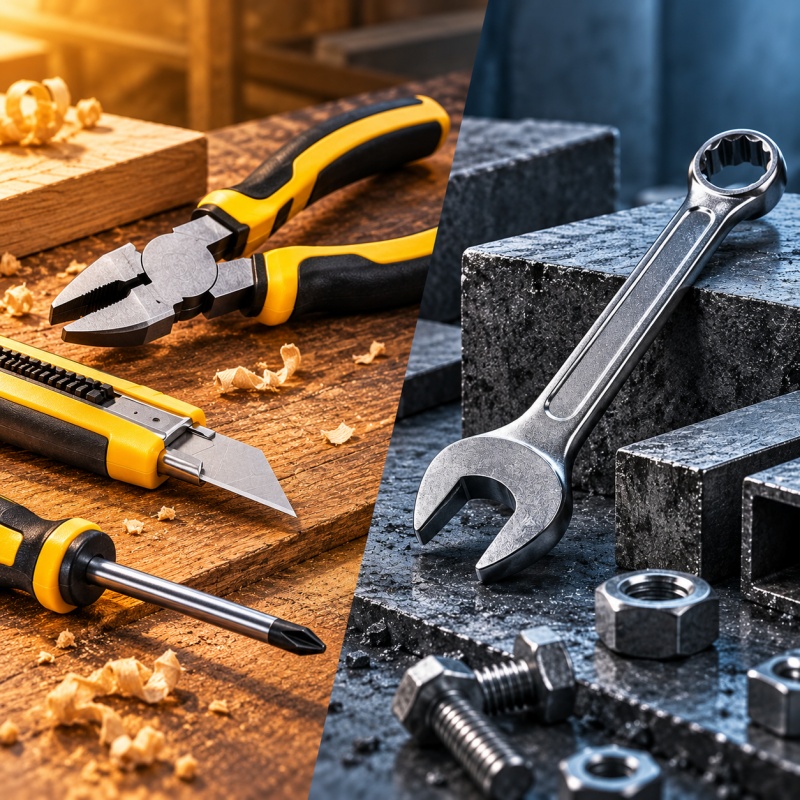
| Typical applications | Cutting edges, screwdriver tips | Wrenches, plier bodies, impact tools |
Harder steel can provide better wear resistance, but excessive hardness may increase brittleness. A very hard tool may maintain its shape under normal use but chip or crack when subjected to unexpected impact or excessive stress.
On the other hand, steel with insufficient hardness may bend or wear prematurely, even if it has good toughness.
Therefore, neither property alone determines overall tool durability.
Different hand tools experience different types of force. Their material properties must match their intended applications.
Wrenches must withstand high torque without excessive deformation or cracking. Their jaws need sufficient hardness to resist wear, while the body requires adequate strength and toughness to handle applied loads.
Pliers require different properties in different areas. Cutting edges need sufficient hardness to maintain cutting performance, while handles and joints need strength and toughness to withstand repeated gripping forces.
Screwdriver tips must resist wear and deformation to maintain proper engagement with screws. Meanwhile, the shaft must withstand twisting forces without cracking or breaking.
Cutting tools require hard edges to maintain sharpness. However, insufficient toughness can cause chipping or fracture, especially when cutting hard materials or experiencing side loads.
An unsuitable combination of hardness and toughness can affect tool performance and service life.
If steel is too hard and lacks sufficient toughness for its application, the tool may experience:
Chipped cutting edges.
Cracked screwdriver tips.
Sudden fracture under impact or excessive loading.
If steel lacks adequate hardness, common problems include:
Worn gripping surfaces.
Deformed screwdriver tips.
Reduced cutting-edge retention.
These problems demonstrate why the highest hardness rating does not always indicate the best tool quality.
The quality of a hand tool depends on more than steel hardness. A proper balance of hardness, toughness, and structural strength helps ensure reliable performance and long-term durability across different applications.
At ProBuilt, we offer a wide selection of hand tools, including wrenches, pliers, screwdrivers, and cutting tools to meet different market needs. Whether you're looking to expand your product range or source dependable hand tools for wholesale distribution, we're here to help.Contact ProBuilt today to explore our product range, discuss your sourcing requirements, and find the right hand tool solutions for your business.
1. Is higher steel hardness always better for hand tools?
No. Higher hardness may improve wear resistance, but excessive hardness can increase brittleness. The ideal hardness depends on the tool's application and required toughness.
2. Why do some hard steel tools break easily?
Hard steel tools may break if they lack sufficient toughness to withstand impact or stress. Tool design, manufacturing defects, and excessive loading can also contribute to failure.
3. Which is more important for wrenches: hardness or toughness?
Both are important. Hardness helps wrench jaws resist wear and deformation, while toughness helps the tool resist cracking and fracture under load.
4. Can two tools made from the same steel have different durability?
Yes. Heat treatment, tool geometry, manufacturing quality, and working conditions can cause tools made from the same steel grade to perform differently.

Copyright © Sinotools Industrial All Rights Reserved.. Technical Support:

 Live Help