+86 311 8533 5186
Utility knives are essential tools used across various industries, from DIY projects to professional construction. However, selecting the right utility knife for different tasks can be tricky. The blade type, material, and design vary, and choosing the wrong one can result in inefficiency or even damage to your workpiece. This guide will walk you through how to choose the best utility knife for cutting a range of materials, ensuring precise, clean cuts every time.
Utility knives come in various designs, but they all share the common goal of offering versatility for different cutting jobs. The main factors to consider when selecting a utility knife are:
Blade Type: Fixed or retractable.
Blade Material: High-carbon steel, stainless steel, titanium-coated.
Handle Design: Comfortable and ergonomic for long-term use.
Utility knives are often used for tasks like cutting packaging, plastic, wood, and even some metals. Understanding your specific needs will help you select the ideal knife.
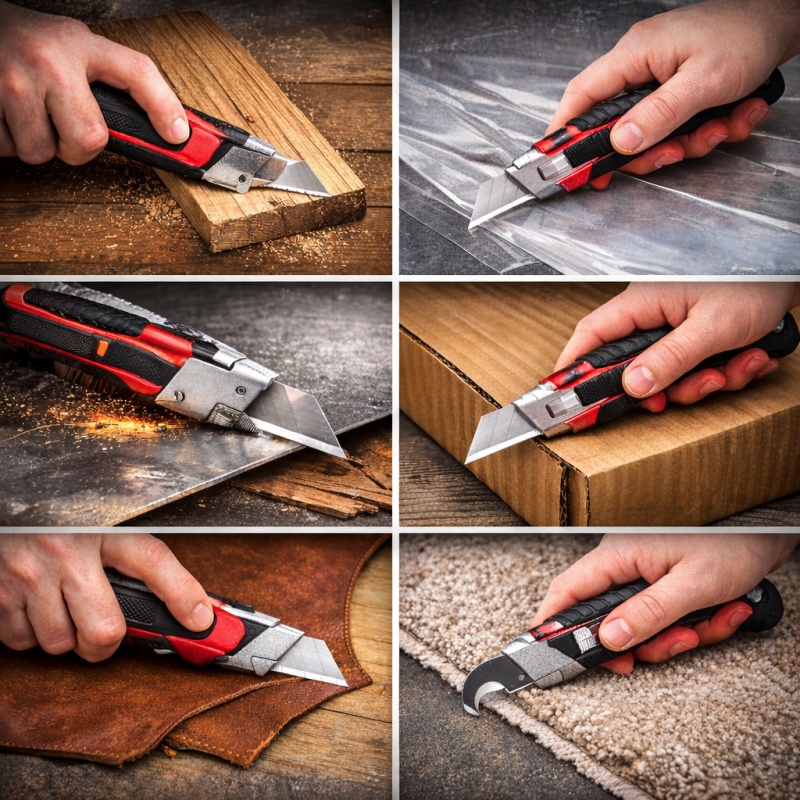
Ideal Blade Type: Fixed Blade with a Strong, Sturdy Edge
Woodworking requires precision and strength. A utility knife with a robust, thick blade will provide better stability for deeper cuts in wood. Fixed blade utility knives offer better control for tougher materials, allowing you to cut through wood efficiently.
Tips for Cutting Wood:
Use a knife with a thick, fixed blade for deep cuts.
For more detailed work, consider a retractable knife with a sharp, snap-off blade.
Always support the wood beneath with a cutting mat to avoid damaging surfaces.
Ideal Blade Type: Retractable Blade with a Fine Edge
Plastic is a versatile material used in various applications, from packaging to construction. A utility knife with a fine, sharp blade will allow for clean, smooth cuts without cracking the plastic.
Tips for Cutting Plastic:
Use a sharp, retractable blade to reduce cracking.
For thicker plastics, consider a heavy-duty utility knife.
Make sure the blade is angled correctly for precise cuts.
Ideal Blade Type: Heavy-Duty Fixed Blade or Metal-Cutting Specific Blade
Metal is challenging to cut with standard utility knives, so you need a tough, durable blade. Heavy-duty utility knives with metal-specific blades are designed to withstand the hardness and pressure of cutting through metal sheets, wires, and thin strips.
Tips for Cutting Metal:
Use a utility knife with a high-carbon steel or tungsten blade.
Ensure the blade is specifically designed for metal to prevent dulling quickly.
Always wear gloves and goggles for safety when cutting metal.
Ideal Blade Type: Snap-Off Blade or Retractable Blade
Cutting cardboard and paper is a common task that requires a sharp, thin blade for clean lines. Snap-off blades are particularly useful for tasks where the blade dulls quickly, as you can easily expose a new sharp edge after each cut.
Tips for Cutting Cardboard and Paper:
Use a snap-off blade for continuous sharp edges.
For straight, precise cuts, always use a ruler or straight edge.
Opt for a retractable utility knife for smaller, more controlled cuts.
The material of the blade plays a significant role in the utility knife's performance. Here are some common blade materials to consider:
High Carbon Steel: Offers strength and durability for tougher materials like wood and metal.
Stainless Steel: Corrosion-resistant and ideal for general-purpose use.
Titanium-Coated Blades: Extremely resistant to wear and corrosion, ideal for tough, repetitive cutting tasks.
The handle of your utility knife can make a big difference, especially if you use the tool for extended periods. Look for an ergonomic design with a non-slip grip to ensure safety and comfort. Some handles are designed for heavy-duty work, while others are built for precision cutting, so choose one based on your specific needs.
Selecting the right utility knife for your cutting tasks can greatly improve both efficiency and safety. Whether you're cutting wood, plastic, metal, or paper, knowing which knife to use for the job is crucial. Always choose a knife with the appropriate blade type and material for the material you're working with. By investing in the right utility knife, you’ll ensure your cutting tasks are completed smoothly, safely, and with precision.
If you're looking for expert advice or need help choosing the right utility knife for your tasks, feel free to Contact Us today.

Copyright © Sinotools Industrial All Rights Reserved.. Technical Support:

 Live Help