+86 311 8533 5186
The surface finish of ahand toolaffects more than its appearance. It influences corrosion resistance, wear performance, maintenance requirements, and overall product quality. Among the common finishing options, chrome plating and black oxide are widely used in hand tool manufacturing.
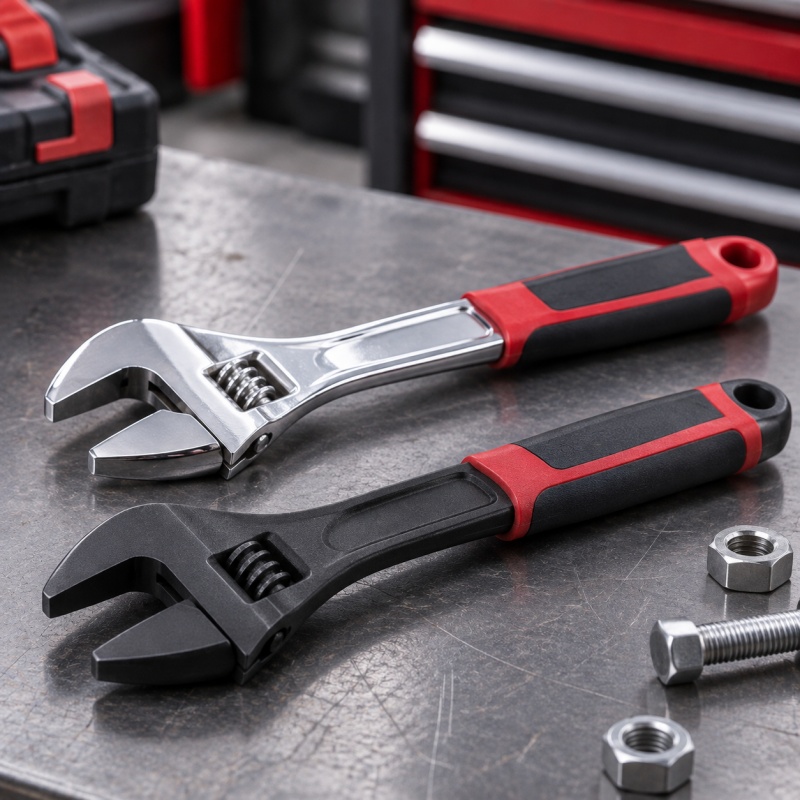
Chrome plating is generally better for corrosion resistance, surface protection, and a polished appearance, while black oxide is a cost-effective option for tools requiring a matte black finish and minimal dimensional change. The right choice depends on the tool's application, working environment, and performance requirements.
Understanding these differences helps when selecting hand tools for different markets and applications.
Chrome plating is an electroplating process that deposits a thin layer of chromium onto a metal surface. In hand tool manufacturing, it is commonly used to improve surface appearance, corrosion resistance, and resistance to everyday wear.
Corrosion resistance: Chrome plating helps protect the underlying steel from moisture and oxidation when the coating is intact.
Wear resistance: The hard surface helps reduce scratches and surface wear during regular use.
Easy cleaning: Its smooth, non-porous surface makes dirt, grease, and oil easier to remove.
Professional appearance: The bright, reflective finish gives tools a clean and polished look.
Chrome plating is frequently used on hand tools that require a durable, easy-to-clean surface and an attractive appearance, such as:
Wrenches and spanners
Hand sockets
Ratchets
Screwdrivers with chrome-plated metal components
However, chrome plating is not completely resistant to damage. Under heavy impact or improper use, the coating may chip or peel, exposing the steel underneath to moisture and corrosion.
Black oxide is a chemical conversion process that creates a dark oxide layer on the surface of steel. Unlike chrome plating, it does not add a separate metal coating. Instead, it converts the outer surface of the steel into a black iron oxide layer.
This process produces a thin, uniform finish that has very little effect on the original dimensions of the tool.
Minimal dimensional change: Its thin coating makes it suitable for tools and components with tight dimensional requirements.
Reduced glare: The matte black surface minimizes light reflection, making it useful in certain workshop and industrial environments.
Cost-effective processing: It is generally an economical finishing option for manufacturers.
Consistent appearance: It creates a uniform dark finish that gives tools a simple, professional look.
Black oxide is commonly found on:
Selected wrenches and sockets
Screwdriver components
Precision metal components
Fasteners and mechanical parts
One important limitation is its relatively low corrosion resistance. Black oxide alone provides only limited rust protection. Additional treatments, such as oil, wax, or sealants, are usually needed to improve its resistance to moisture.
Regular cleaning, drying, and maintenance are also important, particularly when tools are used in humid environments.
Although both finishes improve the surface condition of steel tools, they differ significantly in their manufacturing processes and performance.
| Comparison | Chrome Plating | Black Oxide |
|---|---|---|
| Process | Electroplating | Chemical conversion |
| Appearance | Bright, reflective silver | Matte black |
| Corrosion resistance | Generally higher when intact | Limited without additional treatment |
| Surface wear | Hard, wear-resistant surface | Limited additional wear protection |
| Coating thickness | Thicker than typical black oxide | Extremely thin |
| Dimensional impact | Requires thickness control | Minimal |
| Maintenance | Relatively easy to clean | Requires regular rust prevention |
| Processing cost | Generally higher | Generally lower |
Chrome plating generally provides better corrosion protection than black oxide because it creates a protective chromium layer over the steel surface.
Black oxide offers much less protection on its own. Its performance depends heavily on supplementary oil or wax treatments and proper storage.
For tools frequently exposed to moisture, chrome plating is usually the more practical option.
Chrome plating provides a hard surface that resists everyday abrasion and scratching. This makes it suitable for hand tools that experience frequent contact and handling.
Black oxide primarily improves surface appearance and provides a thin conversion layer. It should not be considered a substitute for a hard wear-resistant coating.
It is also important to distinguish between coating performance and the strength of the underlying steel. Neither finish automatically increases the structural strength of a hand tool.
Chrome-plated tools have a bright, polished appearance that is easy to inspect and clean. This finish is often preferred for retail hand tool sets and professional workshop equipment.
Black oxide provides a darker, non-reflective appearance. However, tools with this finish generally require more attention to moisture control and rust prevention.
Black oxide is generally more economical to process because it does not require the same electroplating setup as chrome finishing.
Chrome plating involves additional processing and quality control requirements, which can increase manufacturing costs.
For bulk purchasing, the final price should also consider coating specifications, production volume, quality requirements, and packaging.
There is no universally better finish. The most suitable option depends on the intended application and the expectations of the target market.
Tools need better corrosion resistance during normal use and storage.
A bright, polished appearance is important.
Tools are frequently handled and cleaned.
Products are intended for professional workshops or general-purpose hand tool sets.
A matte black appearance is preferred.
Minimal changes to component dimensions are required.
The tools are used mainly in controlled indoor environments.
Cost efficiency is an important consideration.
Users can perform regular maintenance to prevent rust.
Chrome plating and black oxide each offer distinct advantages for hand tools. Chrome plating is generally the better choice when corrosion resistance, easy maintenance, and a polished appearance are priorities. Black oxide is more suitable when a matte finish, dimensional stability, and economical processing are required.
Looking for a reliable hand tool supplier? ProBuilt offers a range of hand tools for different applications and market requirements. Contact our team to discuss product specifications, finishing options, and bulk purchasing requirements.
1. Is chrome plating better than black oxide for hand tools?
Chrome plating is generally better for corrosion resistance, surface wear protection, and ease of cleaning. Black oxide is more economical and provides a thin, matte finish. The better option depends on the intended use and working environment.
2. Does black oxide prevent rust?
Black oxide provides only limited corrosion protection on its own. An additional oil, wax, or sealant treatment is normally required to improve rust resistance. Tools should also be kept clean and dry.
3. Does chrome plating wear off?
Yes. Chrome plating can wear, chip, or peel over time, especially under harsh use or repeated impact. Once the underlying steel is exposed, it becomes more vulnerable to corrosion.
4. Is black oxide more durable than chrome plating?
Not necessarily. Black oxide is a thin conversion layer mainly valued for appearance and dimensional stability, while chrome plating provides a harder surface with better resistance to everyday abrasion. Durability also depends on the base material and actual working conditions.
5. Does chrome plating increase the strength of hand tools?
No. Chrome plating improves surface properties, such as wear resistance and corrosion protection, but it does not directly increase the structural strength of the underlying steel. Tool strength mainly depends on material selection, manufacturing processes, and heat treatment.

Copyright © Sinotools Industrial All Rights Reserved.. Technical Support:

 Live Help