+86 311 8533 5186
A crimping tool is a hand tool used to join wires and connectors by mechanically compressing a terminal or connector onto the wire. Widely used in electrical, automotive, and telecommunications industries, crimping tools ensure strong, reliable joints that maintain electrical continuity and prevent failures. In this article, we will explore what a crimping tool is, how it functions, and why it is indispensable in various professional applications.
Crimping tools are designed to compress connectors or terminals onto wires or cables. By using a crimping tool, professionals can create a strong, reliable connection that maintains electrical continuity and structural integrity. These tools typically feature specialized dies, which are used to shape the connector around the wire, forming a tight bond.
Crimping tools come in various sizes and designs, with each type suited for different tasks. For example, ratchet crimpers are used for precise and consistent crimping, ensuring that each connection is made with the correct amount of pressure. On the other hand, manual crimping tools are often more versatile but may require more effort to operate.
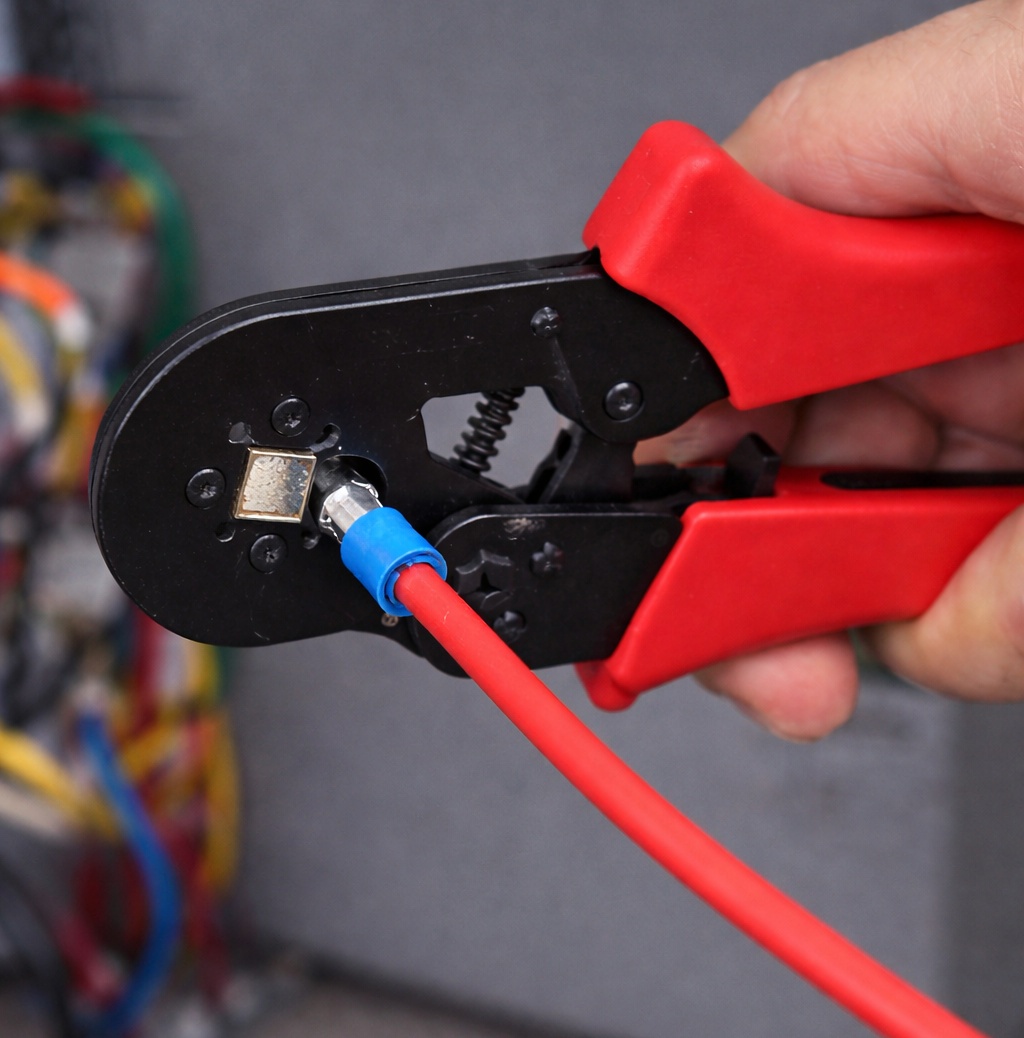
The basic working principle of a crimping tool involves the following steps:
Preparation: Start by selecting the correct connector and crimping tool for your specific task. The size and type of connector will determine which crimping tool to use.
Insertion: Insert the wire into the connector, ensuring that it is positioned correctly and that the conductor (the metal part of the wire) is fully inside the connector.
Compression: Use the crimping tool to apply pressure to the connector. The tool’s jaws will compress the connector onto the wire, securing it tightly. The amount of pressure needed depends on the wire gauge and the type of connector.
Inspection: After crimping, inspect the connection to ensure that the wire is securely attached to the connector, and there are no visible gaps or defects.
Reliability: Crimping tools provide a secure and long-lasting connection, minimizing the chances of loose or unreliable connections that could lead to faults or failures.
Time Efficiency: Crimping is faster and more efficient compared to other methods of joining materials, such as soldering or twisting wires together.
Versatility: Crimping tools can be used for a wide range of applications, from automotive to electrical and industrial uses.
Cost-Effective: Crimping is an affordable method to ensure strong connections without the need for specialized equipment.
Electrical Wiring: Crimping tools are most commonly used in the electrical industry to attach connectors to wires, such as when making cable assemblies or installing terminals.
Automotive Wiring: Crimping tools are also widely used in the automotive industry for securing electrical connections in vehicles.
Telecommunication: Crimping tools are used to create secure connections for network cables and other communication devices.
Crimping tools are indispensable for creating secure, efficient, and long-lasting connections in a variety of industries, from electrical to automotive and telecommunications. Their ability to provide consistent and reliable results makes them an essential tool in both professional and DIY settings. By choosing the right crimping tool for your needs, you can ensure the quality and durability of your connections.
If you're looking for high-quality crimping tools or need expert advice on selecting the right tool for your projects, contact us today. Our team is ready to assist you in finding the perfect solution for your crimping needs.

Copyright © Sinotools Industrial All Rights Reserved.. Technical Support:

 Live Help