+86 311 8533 5186
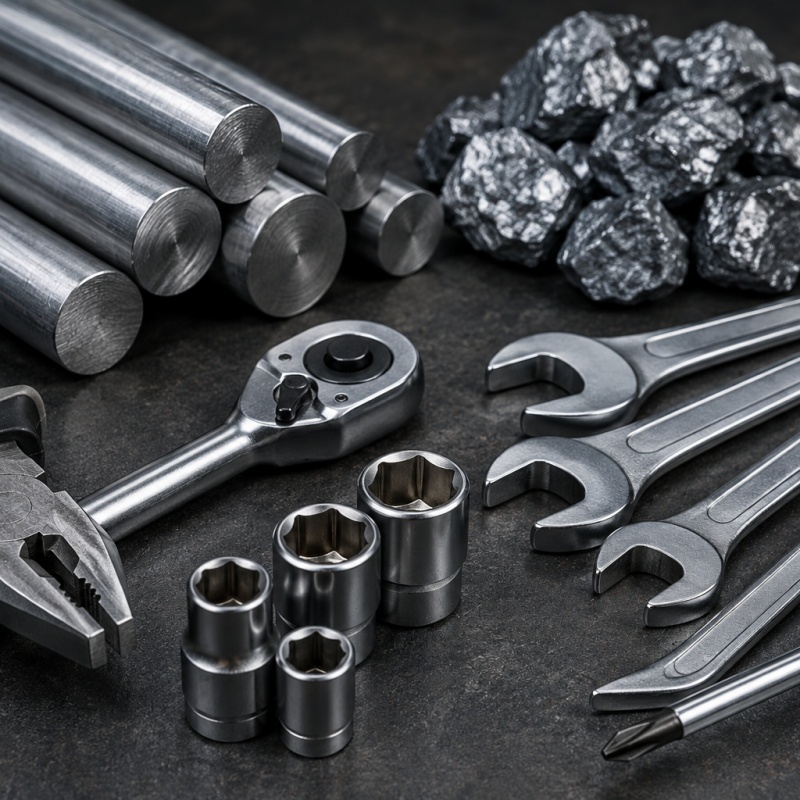
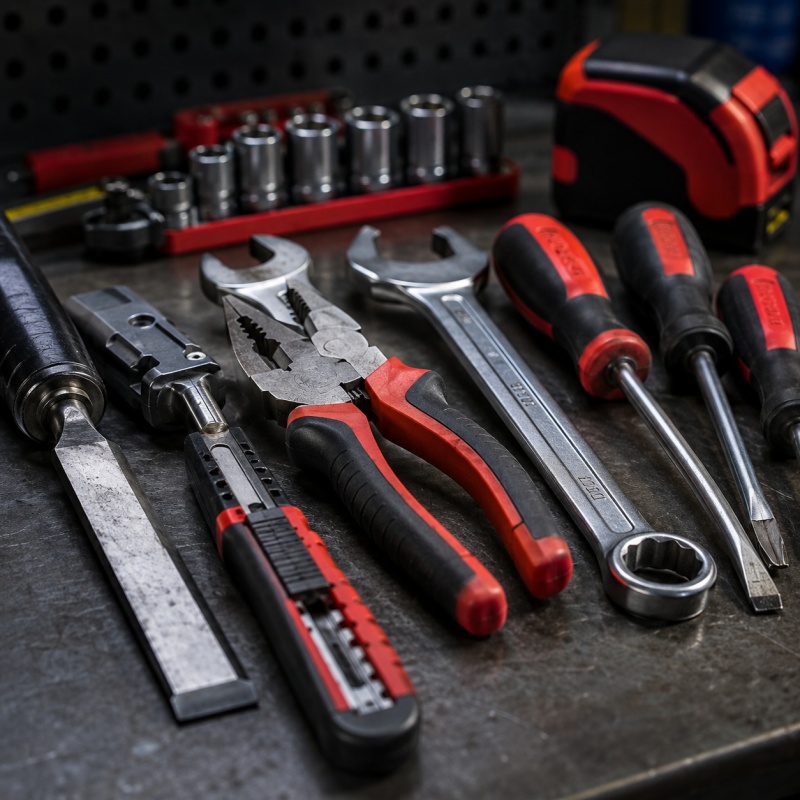
In the hand tool industry, material quality directly affects tool performance, durability, and safety. One of the most common technical specifications used to evaluate tool strength is HRC hardness. Whether sourcing pliers, utility knives, screwdrivers, chisels, or cutting tools, buyers often encounter hardness ratings such as HRC 48-52 or HRC 58-60.
But what exactly does HRC mean, and why is it important for professional hand tools?
This article explains the meaning of HRC hardness, how it is measured, and how it influences the performance of industrial-grade hand tools.
HRC stands for Rockwell Hardness Scale C, a globally recognized hardness measurement used mainly for hardened steel materials.
The Rockwell hardness test measures how resistant a material is to indentation under a specific load. In hand tools, the HRC value helps indicate:
Wear resistance
Edge retention
Strength under pressure
Overall durability
Higher HRC values generally indicate harder steel, while lower values indicate softer and more flexible material.
The Rockwell hardness test uses a diamond cone indenter that presses into the steel surface under controlled force.
The depth of the indentation determines the hardness value.
The steel surface is prepared and cleaned
A preliminary minor load is applied
A major load is added
The testing machine measures indentation depth
The HRC value is displayed
The hardness level of a hand tool directly impacts its performance in professional working environments.
Tools such as utility knives, chisels, and snips require higher hardness to maintain sharp edges during repeated use.
Higher HRC often means:
Better cutting efficiency
Longer edge life
Reduced maintenance frequency
However, excessive hardness may increase brittleness if the steel is not properly heat-treated.
Industrial hand tools are frequently exposed to:
Repetitive impact
High torque
Friction
Construction-site conditions
Proper HRC balance helps tools resist:
Surface wear
Deformation
Premature failure
Safety and Reliability
Incorrect hardness levels can create safety risks.
For example:
Steel that is too soft may bend or wear quickly
Steel that is too hard may crack under heavy load
Professional manufacturers carefully balance hardness and toughness during heat treatment.
Different hand tools require different hardness levels depending on their application.
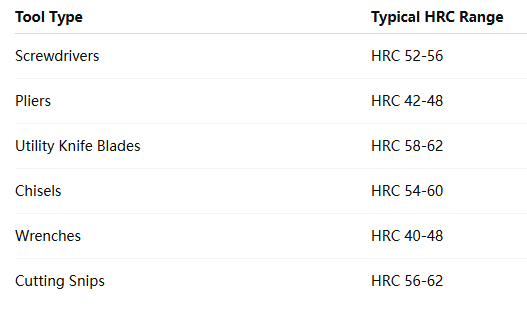
Steel grade
Heat treatment process
Intended industrial application
Many buyers assume higher hardness always means better quality, but this is not always true.Hardness and Toughness Must Be Balanced
Hardness improves:
Wear resistance
Edge retention
Toughness improves:
Impact resistance
Flexibility
Crack resistance
A professional-grade hand tool requires both properties.
For example:
A demolition chisel needs high toughness
A precision cutting blade needs higher hardness
Manufacturers optimize steel composition and heat treatment to achieve the correct balance.
Several steel types are commonly used in industrial hand tools.
Carbon steel is widely used because it offers:
Good hardness potential
Cost efficiency
Easy heat treatment
Chrome vanadium steel is popular for:
Sockets
Benefits include:
Improved toughness
Corrosion resistance
Stable hardness performance
S2 steel is commonly used in:
Screwdriver bits
Impact tools
It provides:
High hardness
Excellent shock resistance
HRC hardness is one of the most important technical indicators in hand tools. It reflects how well a tool can resist wear, maintain strength, and perform under demanding conditions.
However, higher hardness alone does not guarantee better quality. The ideal hand tool combines:
Proper hardness
Balanced toughness
Reliable heat treatment
Consistent manufacturing quality
For distributors, wholesalers, and industrial buyers, understanding HRC hardness can help improve product selection and sourcing decisions. If you are looking for professional OEM hand tool manufacturing solutions, choosing a supplier with stable heat treatment technology and strict quality control ,Welcome to contact us. We are committed to delivering durable, professional hand tools that meet the demands of industrial and commercial users worldwide.

Copyright © Sinotools Industrial All Rights Reserved.. Technical Support:

 Live Help